Last updated August 24, 2026
Car alignment services involve adjusting your vehicle’s suspension components, not the tires themselves, to ensure the wheels are angled correctly. By calibrating the camber, caster, and toe angles, technicians ensure your tires make optimal contact with the road, preventing uneven wear and ensuring the vehicle tracks straight without pulling.
Table of contents
- Key takeaways
- The Fundamentals of Suspension Geometry
- Symptoms of Misalignment and Tire Wear Patterns
- The Role of the Alignment Rack and Professional Tools
- Modern Electronics and ADAS Recalibration
- Differentiating Two-Wheel vs. Four-Wheel Alignment
- Identifying Mechanical Issues That Alignment Cannot Fix
- Maintaining Long-Term Vehicle Stability
- Frequently asked questions
Key takeaways
- Suspension, not tires. Alignment is a suspension adjustment that affects how your tires touch the road.
- The geometry trio. The three primary angles measured are camber (tilt), caster (pivot), and toe (direction).
- Digital requirements. Modern vehicles with ADAS require digital recalibration alongside physical adjustments.
- Component protection. Misalignment accelerates wear on expensive components like tie rods and ball joints.
- Impact triggers. Potholes and curb strikes are the most common causes of immediate alignment shifts.
The Fundamentals of Suspension Geometry
Most people think wheel alignment is a tire service. It isn’t. In reality, it is a precise adjustment of the suspension system that connects the vehicle to its wheels. The process involves fine-tuning mechanical connections that determine how your tires sit against the pavement. When these connections shift even a fraction of an inch, your car loses its ability to track. Rubber scrubs the road rather than rolling smoothly over it.
We focus on the "Big Three" angles to restore factory specifications. Camber is the vertical tilt of the tire when viewed from the front. If the top leans too far in or out, your tires wear lopsided. Caster is the angle of the steering axis when viewed from the side. This angle is vital for steering balance. It helps the wheel return to center after a turn. Toe represents the direction the tires point relative to the vehicle’s centerline. Think of it like pointing your own toes inward while walking.
Proper geometry ensures the steering wheel returns to the center naturally. It keeps the vehicle stable at high speeds. Data regarding how alignment technology works shows these settings prevent wandering. They reduce the effort needed to maintain a straight path. At Pette’s Auto Care, we use a Dependability Focus to ensure these settings aren’t just within a generic range. We optimize them for your specific driving habits and vehicle load. Misaligned wheels increase rolling resistance. This kills your fuel efficiency.
Symptoms of Misalignment and Tire Wear Patterns
Spotting misalignment is easy once you know what to feel. Look for a steering wheel that sits off-center while you drive straight. You might feel the vehicle pull forcefully to one side. These symptoms mean your suspension is fighting your steering inputs. If you must hold the wheel at an angle to keep the car between the lines, stop. Your vehicle is under constant mechanical stress. Component fatigue will follow.
A distinct pull is the most famous symptom. An off-center steering wheel is just as dangerous. You might find yourself holding the wheel at a ten o’clock position just to stay in your lane. This constant correction is exhausting. It means the steering linkage is under continuous tension.
Honest Care Tip: Never pay for an alignment until the shop has confirmed your tire pressures are correct and your suspension joints are tight. Adjusting a car with worn-out ball joints is a waste of your money.
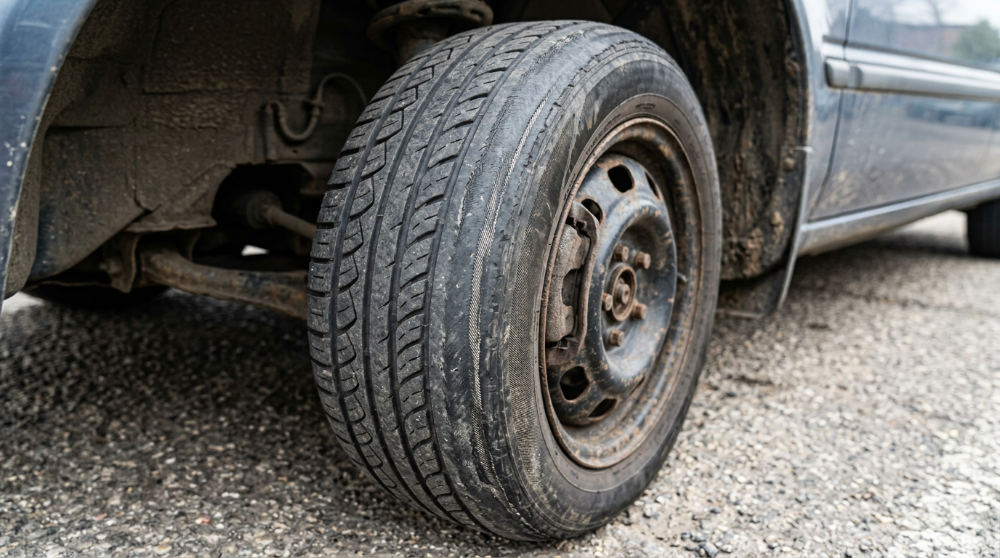
Uneven tire wear patterns tell a story. "Feathering" or excessive wear on just one edge means the alignment is actively scrubbing rubber off. Feathering happens when tread is smooth on one side and sharp on the other. This usually comes from incorrect toe settings. If you notice a sawtooth appearance on the tread blocks, your suspension is dragging the tire sideways. It is literally sanding your tires down as you drive.
Vibrations or a sloppy feeling during turns often point to shifted components. We believe in a Holistic Diagnostics approach. Before we touch the alignment rack, we check your brake and engine systems. We want to ensure a vibration isn’t actually a warped rotor or a powertrain issue. Ignoring these signs places unnecessary stress on tie rods and control arms. This leads to costly mechanical failures. Proper maintenance prevents these parts from becoming safety hazards.

The Role of the Alignment Rack and Professional Tools
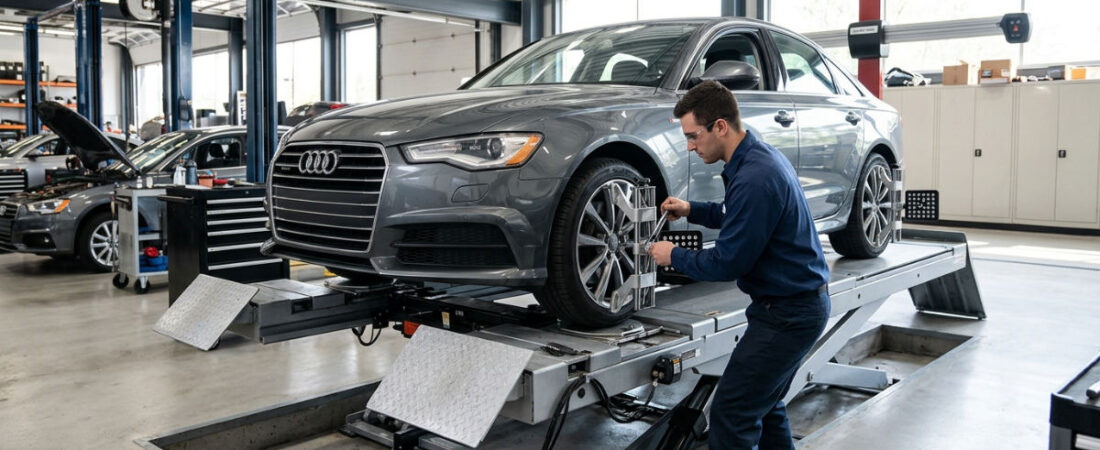
Modern car alignment services rely on a specialized alignment rack. This platform uses high-resolution cameras and laser sensors to map your vehicle’s geometry. We drive the vehicle onto the rack and secure the wheels. The rack creates a three-dimensional model of each wheel’s position relative to the chassis.
Technicians attach specialized targets to the wheels. These communicate with a computer system to measure angles with extreme precision. Human eyesight cannot detect these subtle deviations. Yet, those small errors ruin a set of tires in a few thousand miles. The system provides real-time feedback. We see exactly how each turn of a wrench affects the wheel’s orientation.
This technology beats older manual methods every time. It accounts for the chassis’s relationship to all four wheels at once. During the process, we provide Pette’s "No-Pressure" Explanation. We show you the digital printout of your current specs versus the manufacturer’s recommendations. This transparency allows you to see the deviation before we touch your steering knuckles. You can see the before and after numbers. The proof is in the data.
Modern Electronics and ADAS Recalibration
Modern vehicles are rolling computers. They use ADAS (Advanced Driver Assistance Systems) like lane-keep assist and emergency braking. These systems rely on the physical position of the wheels. Cameras and radar see the road, but they assume the wheels point where the steering column says they do. If the physical alignment is off, the electronic eyes will be blind to the actual direction of travel.
Tech Fact: Many late-model vehicles require an ADAS steering angle reset during the alignment to ensure your lane-departure warnings work correctly.
Adjusting the mechanical alignment without recalibrating sensors is a half-job. Your car’s safety tech will receive false data. For example, the car might think it is drifting out of a lane because the steering angle sensor is out of sync. It might apply corrective braking unexpectedly. This is jarring. At highway speeds, it is dangerous.
A professional service must include a digital check. We ensure the steering angle sensor matches the physical tires. Failure to perform this digital handshake can result in the vehicle correcting its steering when it shouldn’t. This specialized digital step separates a modern comprehensive auto care service from a basic tire shop quick-fix.
Differentiating Two-Wheel vs. Four-Wheel Alignment
A front end alignment deals only with the two wheels on the steering axle. It is usually for older vehicles with solid rear axles. In those designs, rear wheels are fixed. However, for most cars on the road today, a two-wheel service is insufficient. It ignores how the rear of the car influences the front.
A 4 wheel alignment is mandatory for most modern cars. This is especially true for independent rear suspensions or all-wheel-drive systems. We adjust the rear angles first, then move to the front. This ensures all four wheels are parallel to one another and square to the chassis. It is the only way to stop a car from "crab-walking" down the road.
Rear wheels dictate the thrust angle. Even if they don’t steer, they tell the front wheels where to go. If the rear points left, you must steer right just to go straight. Professional shops perform a suspension inspection first. We check ball joints and control arms to see if they can even hold an alignment. We use an Honest Pricing Framework. We will tell you when a four-wheel service is essential for safety and when it isn’t.
Identifying Mechanical Issues That Alignment Cannot Fix
Alignment is not a magic wand. It cannot fix physically damaged steering components. If ball joints, tie rods, or control arms are loose, a technician cannot help you. The wheels will not hold their position once the vehicle leaves the alignment rack. You must replace damaged mechanical parts before calibration.
Do not waste money aligning a broken car. If a ball joint is failing or a control arm is bent from a pothole, the adjustment won’t stick. Attempting to align a car with damaged parts is dangerous. Settings shift the moment you hit a bump. A reputable technician always checks for "play" in the suspension before starting the machine.
New tires won’t fix a pull. If the underlying suspension geometry is crooked, you are just buying a fresh set of rubber to destroy. Many drivers think fresh tires solve steering woes. They don’t. If the suspension pulls the tire sideways, that fresh tread disappears in months. Research on the benefits of professional wheel alignment shows that protecting your tire investment is the primary reason to get this done.
Low tire pressure mimics misalignment. We check and equalize pressures before we even diagnose an alignment issue. If your front left tire is five pounds lower than the right, the car pulls left. If you only replaced two tires, an alignment isn’t always mandatory, but we highly recommend it. Protect your investment. Be wary of "lifetime" alignment upsells. If they don’t include a full inspection of the steering linkage, the service is useless.
Maintaining Long-Term Vehicle Stability
Proactive alignment checks are part of essential car maintenance tips. They help you avoid the high cost of premature tire replacement. By catching small deviations early, you prevent the "death wobble" or severe pulling. Driving shouldn’t be stressful. It is much cheaper to pay for an adjustment than a set of premium tires.
We recommend regular checks. Get an immediate inspection after hitting a curb or a deep pothole. A single hard strike knocks a tie rod out of place. Keeping your steering geometry in check ensures your vehicle remains "ready for the road." It provides a predictable and safe driving experience for years.
Consult our professional alignment and suspension services to see how we combine precision with honesty. Stay informed. Drive with confidence knowing your safety systems and tires are perfectly synchronized.
If your steering wheel is off-center or tires are wearing unevenly, you can request an honest quote from our team. Let’s get your vehicle back on the straight and narrow.
Frequently asked questions
How do I know if I need a wheel alignment?
You generally need an alignment if your car pulls to one side when you loosen your grip on the steering wheel or if the wheel stays crooked while you are traveling straight. You should also look for rapid or uneven tread wear on the edges of your tires, which suggests the wheels are scrubbing against the road surface.
Is wheel alignment the same as tire balancing?
No, these are distinct services. Balancing addresses weight distribution within the tire and wheel assembly to stop vibrations at high speeds. Alignment, however, adjusts the angles of the suspension components so the tires point in the correct direction and maintain proper contact with the road. Both are necessary for a smooth ride.
Can hitting a pothole once throw off my alignment?
Yes, a single hard impact can bend a suspension component or knock a tie rod out of its specific setting. Even if there is no visible damage to the wheel or tire, the jarring force can shift the toe or camber settings significantly. It is best to have a professional check the geometry after any impact that feels severe.
How long does a professional car alignment service typically take?
A standard four-wheel alignment service duration varies based on the vehicle and mechanical condition. The process begins with a detailed inspection and measurement phase. However, if the vehicle requires ADAS recalibration or if the adjustment bolts are seized due to rust or age, the service may take longer to complete safely and accurately.
Will new tires automatically fix my car’s pulling issue?
New tires may temporarily mask the symptoms because they have full tread depth, but they do not fix the mechanical cause of the pulling. Without a proper alignment, the same suspension forces that ruined your old tires will begin destroying the new ones immediately. You should always pair new tire installation with a professional alignment check.